Showing posts with label education. Show all posts

Wednesday, February 11, 2015

Joys of Going to School Early


With insomnia seeping in to the body clocks of more college students by the decade, it is a true struggle to wake up in the morning let alone go to school at the traditional breakfast time in one’s time zone.  It is a struggle but still attainable.  Read on for the benefits of going to school as early as the sun is just rising and setting it’s space in the sky.

Less crowded

Campuses usually start to get crowded by past 7 or before 9 in the morning. And so being at school before those times can give you a vantage point of being able to enjoy a little of solitude and more room to walk or even glide around with your bag and books and your electronic buddies like your tablet and phone.

Fresh air

Really, really fresh air is hard to breathe nowadays and are at their finest only during the mornings.  So, if you are yearning for a good blow of wind against your face, then get up and get out of your dorm a little after six in the morning and walk to school.  The air during that time of the day is fresh and pleasing to the lungs and skin and overall well-being.

Last-minute note peeking is less stressful

We are all prone to just looking at our notes a minute or so before lectures begin and so coming to school as early as the school janitor will give us more to just to sit and go over our notes and insert those much-needed to know notes that might be part of the next lecture or a pop quiz.

No heavy traffic

This is probably one of the joys of being an early-to-bed-early-to-school college student.  Heavy traffic is a source of early morning stress to college students who commute going to school and to some extent, those who live on-campus.  The beautiful hours of 5:30 to 6:30 in the morning are free from congestion of vehicles and people walking or running around.

Thursday, October 31, 2013

What is Action Learning?


It is another educational systematic method whereby students work and learn at the same time by discussing real social issues and manifesting it on their actions. Apprentices attain knowledge by means of actual deeds and practice rather than the customary instruction.

Action learning is done while integrating with other learners, in sub-groups referred as action learning sets. It is usually propositioned as in a particular group, as it allows and empowers each person to ponder on and assess the action or deeds they have engaged and the learning points arising, so they can enhance their performance.
With this kind of environment, a student chooses real life encounters by repeatedly performing it with others, and then acquires response and pointers by examining their actions.

For many years, action learning is one of the effective frameworks that have been used for workplace learning in business settings. It is becoming popular nowadays particularly in school, college university and other learning grounds by achieving a dynamic interaction rather than a sheer process.

Friday, September 27, 2013

Benefits of Experiential Learning


Learning from experience, or simply experiential learning builds an opportunity to be involve and to execute applied learning through hands-on experience, while instantaneously understand and gather new useful information about the environment that surrounds them. With this kind of learning, students tend to express their ideas and experiences eagerly in classroom as well on different setting.

Experiential Learning invigorates schoolchildren to create useful findings and experiment with knowledge themselves, as a substitute of grasping the knowledge about different life encounters of other individual.


And here are sensible viewpoints of three skilled educators in various fields of learning about the advantages of this approach.

Ann O. Koloski-Ostrow, Associate Professor of Classical Studies: "Experiential learning for me means bringing the students into the everyday lives of people who lived and died 2,500 years ago in the world of ancient Greece and Rome. Our collection of 800 ancient objects in the Classical Studies Artifact Research Center makes it possible for students actually to hold classical objects and try to feel what it would have been like in those days. The Romans, for example, did not just make high art, but they also had baby bottles, ordinary drinking cups, tongue depressors and a fantastic sewer system."

Scott Gravina, Senior Lecturer in Hispanic Studies: "Experiential Learning gives students the opportunity to take what they learn in class and apply it to real world situations. Taking their learning beyond the campus provides them with new perspectives and first-hand experience while allowing them to make personal contact with the community and give of themselves in ways they may never have thought possible. Through this practical approach to learning, students gain confidence in their own abilities, discover innovative ways to overcome obstacles and turn a class project into a life experience"

Vardit Ringvald, Professor of Hebrew and Director of the Hebrew and Arabic Languages Program:
"Teaching an experiential learning course has required me to explore the issues which the students are curious about, in order to be able to mentor them better. It actually has affected my approach to my discipline. I have become more aware of the “real world” applications of teaching and learning foreign languages, and I incorporate my new understandings in my teaching and in my research."


Saturday, August 24, 2013

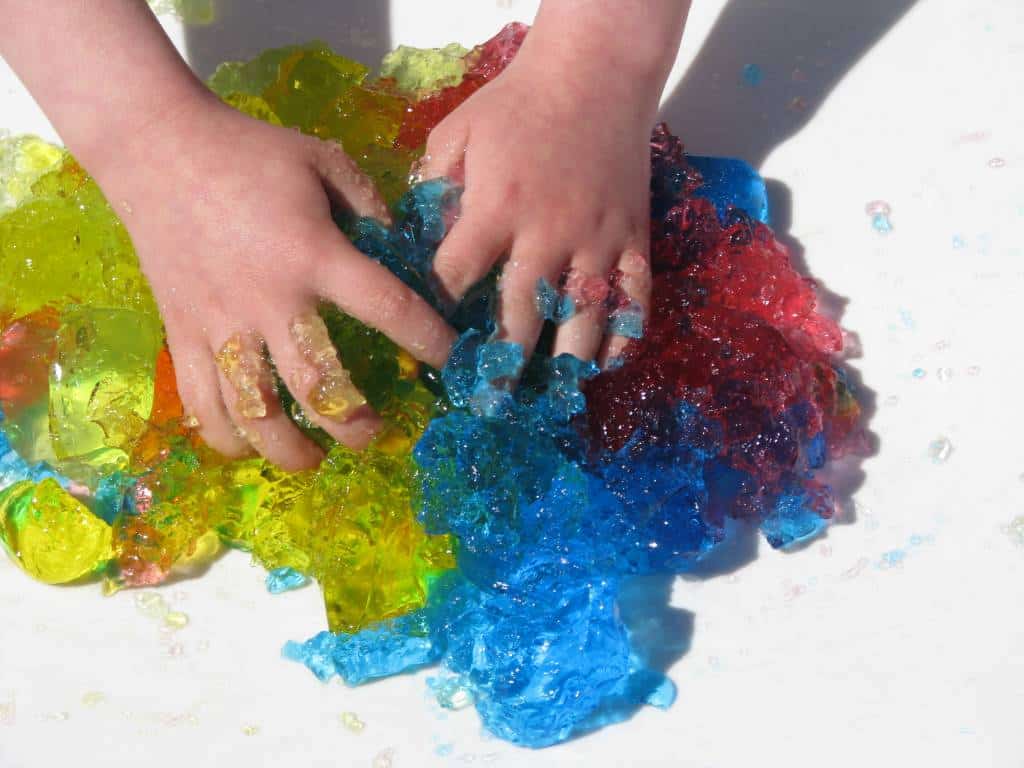
Educating Kindergarten Students about the Sense of Touch


Four of the sense organs of the human body: vision, smell, taste and hearing can be found in particular parts of the body, but the sense of touch is located all over. As a matter of fact, our somatosensory system arises in the skin layer between epidermis and subcutaneous tissues called dermis. It is occupied with numerous microscopic nerve endings that can transmit information about the objects with which the fleshly body comes in contact. The transmitted information carries to a long, thin, tubular bundle of nervous tissue, or better known as the spinal cord, that also transfers messages to the brain where the sensation is registered.

The touch receptors are comprised of millions of tiny nerve endings in the skin where it can convey you if something is warm or icy. These nerve endings can likewise feel the painful stuff. Sensing the heat, coldness, discomfort and pressure are most of the typical receptors of the skin. In all probability, the most significant for body protection are the pain receptors, as it can defend you by cautioning that you are hurt. 

Definitely, edifying youngsters to discover their sense of touch can be pleasurably fun by simply providing them with objects with a different range of textures and temperatures. Then, ask them to explain what they feel through categorizing things by how they feel and put their observations on a sheet of paper. 


Instructions:
  • Classify the items by sorting hard, soft, rough and smooth objects.
  • Let them close their eyes for a moment.
  • Lend them a variety of things; and ask if they are rough, smooth, hard, or soft.
  • Find out if the kid can recognize the object. (Here are some ideas to provide: sandpaper, cotton, pencil, silk hanky and so forth)
  • As soon as, they can identify all the items, help them to write on the paper and categorize every bits and pieces of the guessing game.
  • Next, enlighten them that this technique can be done with their eyes closed; discuss with the child how these stuff are still able to be distinguished even they can’t see those certain objects.
  • You can talk about that they can similarly sense the feeling through the skin on any part of the body.

Books to Recommend for Kids

My Five Senses Big Book (Let's-Read-And-Find-Out) by Aliki

The 5 Senses (Let's Learn about) by Nuria Roca

Touch (Five Senses) by Maria Rius, J.M. Parramon, and J.J. Puig

Wild Animals (Touch and Feel) by DK Publishing
 Fun With My 5 Senses: Activities to Build Learning Readiness (Williamson Little Hands Series) 
by Sarah Williamson


Friday, December 14, 2012

Cooperative Learning Groups: Effective if Done Right at School

Instigating Cooperative Learning in lecture labs could be beneficial for students to help each other. An educator must guarantee that students will contribute their fair share to carry out school tasks by working together. A lecturer who utilizes a real cooperative learning experience necessitates a number of measures to fulfill distinctive goals in school, such as:
  • Imparting students about the distribution of tasks or division of labor, particularly in a large group
  • Generate a direct interaction between learners
  • Appointing students their specific roles and responsibilities
  • Demonstrating group procedures in order to complete task
  • Granting students group rewards for completing a well done assignment

Plus-points attributes of Cooperative Learning

  • It caters students' achievement through teamwork and group spirit
  • It has social benefits, and also in academics. As it develops both skills, socially and academically.
  • It prepares young learners about job market and team businesses.
  • It also furthers students to acquaint with economics and cost-effective matters